
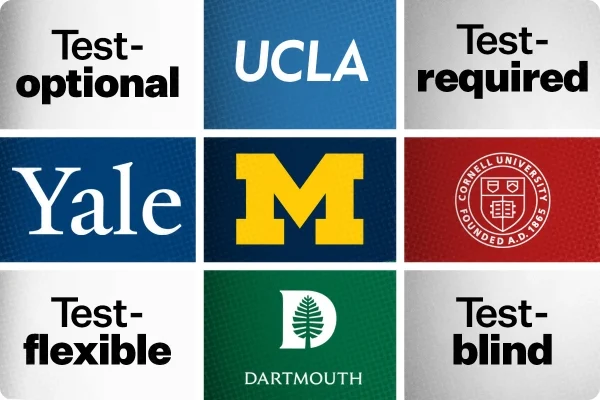
The “test-optional” era that defined the early 2020s has officially reached a historic turning point. As we navigate the 2026 admissions cycle, the landscape for high school juniors and seniors has shifted from a “choose your own adventure” model back to a standardized requirement at many of the nation’s most prestigious institutions.
For families, the confusion is at an all-time high. Is “test-optional” actually optional? Why are the Ivies suddenly reversing course? Most importantly, how should a student in 2026 approach their testing calendar? To answer these questions, we have to look at the data driving these decisions and the schools leading the charge.
The Great Reversal. Which Schools Now Require Scores?
In 2020, nearly every major university dropped testing requirements due to the pandemic. By 2024, the narrative began to shift, and as of 2026, the pendulum has swung back. A “Grand Slam” of elite institutions has officially reinstated mandatory SAT or ACT scores for the Class of 2027 and beyond.
The Ivy League and Elite Private Institutions
Harvard, Yale, Brown, and Dartmouth have all returned to requiring scores. While Yale has adopted a “test-flexible” policy (allowing AP or IB scores in place of the SAT/ACT), the core requirement remains: objective data is mandatory. Stanford and MIT followed suit, citing that scores are the most equitable way to identify high-potential students from varying high school backgrounds.
Large Public Systems
The trend is not limited to the Ivy League. The University of Texas at Austin recently reinstated requirements, joining the entire public university systems of Florida and Georgia. For students aiming for these large, competitive state schools, a strong test score is no longer a “bonus” but a prerequisite for a seat in the freshman class.
Why the Landscape Shifted. The Data Behind the Decision
Many parents wonder why these schools would go back to testing after years of “holistic” review without scores. The answer lies in a landmark 2024 study by Opportunity Insights, which analyzed data from the pandemic years.
The research found that standardized test scores were a much better predictor of a student’s first-year college GPA than high school grades alone. Because of “grade inflation”—where more students are receiving A’s than ever before—admissions officers found it increasingly difficult to distinguish between applicants based solely on transcripts.
Furthermore, these institutions found that test-optional policies actually hurt students from lower-income backgrounds. Without a score to prove their academic readiness, these students were often compared against peers with expensive extracurriculars or private school pedigrees. A high SAT or ACT score remains the “great equalizer” in a crowded application pool.
Understanding the “Optional” Trap
For the schools that remain test-optional (like Princeton, Columbia, and many top-tier liberal arts colleges), the term “optional” can be misleading. In 2026, admissions is more competitive than ever. If two students have identical GPAs and resumes, but one submits a 1550 SAT score and the other submits nothing, the student with the score provides the admissions office with more “certainty.”
In many cases, “test-optional” really means “test-recommended if you want to be competitive.” The only exception is “test-blind” schools, such as the University of California system, which will not look at scores even if they are submitted.
Preparing for the Digital SAT Era
The shift to the Digital SAT has also changed how students prepare. The test is now shorter, adaptive, and taken entirely on a device. While some students find this less intimidating, the “adaptive” nature means the questions get harder as you perform better.
Success in this environment requires a different kind of focus. Students must be comfortable with digital tools like the built-in Desmos calculator and the faster pace of the modules. Because the test is now more streamlined, small errors carry more weight. This is why many families are turning back to rigorous prep early in the junior year.
Building a 2026 Testing Strategy
If you are aiming for a mix of required and optional schools, your strategy should be built on three pillars:
1. Identify Your Target List Early
Do not wait until senior year to check requirements. Create a spreadsheet of your top 10 schools and mark them as Required, Optional, or Flexible. If even one school on your list requires a score, you are officially a “testing student.”
2. Diagnose and Correct Early
The best way to avoid burnout is to start with a baseline. Take a full-length practice test in a proctored environment to see where you stand. Once you have your results, you need a plan. Most students make the mistake of just “doing more problems” without understanding why they missed them. Knowing the best way to review your practice test results is the difference between a 100-point gain and staying stagnant.
3. Avoid the “Easy” Mistakes
Standardized tests are not just about intelligence; they are about strategy. Many high-achieving students walk into the testing center and fail to meet their potential because they fall for traps designed by the test makers. Learning to identify common SAT and ACT mistakes before test day can save you from having to retake the exam three or four times.
Beyond the Score
While testing has returned to the spotlight, it is still only one piece of the puzzle. Admissions officers in 2026 are looking for students who have a “spike”—a specific area of interest or talent that sets them apart.
Once your testing plan is in place, shift your energy toward your extracurricular narrative. Whether it is leadership in a club, a unique part-time job, or a personal project, you should be building an outstanding high school resume that tells a story the admissions committee can’t ignore.
The New Normal
The 2026 admissions cycle has proven that the “death of the SAT” was greatly exaggerated. While the landscape is more complex than it was a decade ago, the path to success remains the same: early preparation, data-driven study habits, and a well-rounded student profile.
If your student is feeling overwhelmed by the shifting requirements, remember that these tests are skills that can be learned. By tackling the requirements head-on rather than avoiding them, you give your student the best possible chance to land at their dream school.